Mastering the Exponential Equation Calculator: Precision in Growth Modeling
The exponential equation calculator is not merely a computational tool—it is a precision instrument for decoding the hidden patterns of growth, decay, and compounding systems that govern everything from microbial populations to stock market trends. Unlike linear or polynomial models, exponential functions capture the accelerating dynamics of real-world phenomena, where small changes in initial conditions can yield disproportionate outcomes over time. Whether you’re analyzing bacterial growth in a lab, projecting loan interest over decades, or simulating radioactive decay, the ability to solve exponential equations with speed and accuracy transforms abstract theory into actionable insight.
Yet, the power of an exponential equation calculator extends beyond its mathematical utility. It bridges the gap between raw data and strategic decision-making, allowing professionals in finance, biology, physics, and engineering to forecast scenarios with confidence. Without such a tool, manual calculations—prone to human error—would limit analysis to simplified approximations, obscuring the nuanced behaviors of exponential systems. The calculator’s role is not just computational but interpretive: it reveals the exponential nature of change, where patience and compounding often outweigh brute-force interventions.
Consider the paradox of exponential growth: a process that appears modest in early stages can spiral into transformative consequences within a few cycles. The exponential growth solver demystifies this phenomenon by translating variables like base rates, time intervals, and initial values into tangible results. This is why industries from pharmaceuticals to renewable energy rely on these tools—not just to solve equations, but to anticipate disruptions, optimize resources, and turn theoretical models into real-world strategies.
The Complete Overview of Exponential Equation Calculators
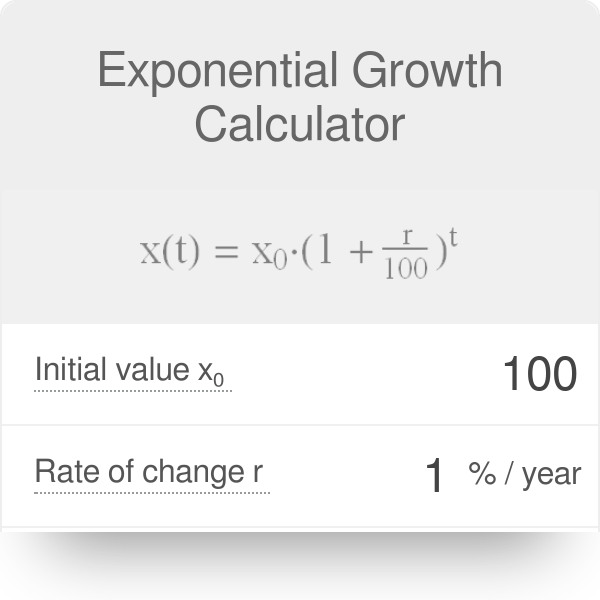
The exponential equation calculator is a specialized digital tool designed to handle equations of the form y = a·bx, where a is the initial value, b is the growth/decay factor, and x represents time or another independent variable. Unlike basic calculators limited to arithmetic or linear functions, these tools incorporate advanced algorithms to solve for unknowns—whether it’s the final value after exponential growth, the time required to reach a threshold, or the rate of change itself. Their versatility stems from their ability to adapt to different contexts: financial analysts use them to model compound interest, biologists apply them to population dynamics, and physicists leverage them for half-life calculations in nuclear reactions.
What sets modern exponential equation solvers apart is their integration with user-friendly interfaces, real-time graphing capabilities, and compatibility with larger computational frameworks. Cloud-based versions, for instance, allow collaborative teams to input variables remotely and visualize trends dynamically. Meanwhile, desktop applications often include additional features like iterative solvers for non-linear exponential systems or customizable output formats for reports. The evolution of these tools reflects a broader shift in how mathematics is applied: from static, paper-based calculations to interactive, data-driven problem-solving.
Historical Background and Evolution
The foundations of exponential mathematics trace back to the 17th century, when mathematicians like John Napier and Jacob Bernoulli formalized logarithmic and exponential relationships. However, the practical application of exponential equations remained limited until the advent of electronic computing in the mid-20th century. Early calculators, such as the HP-35 (1972), introduced exponential functions as basic operations, but their capabilities were constrained by hardware limitations. The real breakthrough came with the rise of personal computers and software like MATLAB or Excel, which embedded exponential solvers as built-in functions, democratizing access to complex calculations.
Table of Contents
- The Complete Overview of Exponential Equation Calculators
- Historical Background and Evolution
- Core Mechanisms: How It Works
- Key Benefits and Crucial Impact
- Major Advantages
- Comparative Analysis
- Future Trends and Innovations
- Conclusion
- Comprehensive FAQs
- Q: Can an exponential equation calculator handle equations with multiple variables (e.g., y = a·b x + c )?
- Q: How does the calculator differentiate between exponential growth and decay?
- Q: Are there free alternatives to paid exponential equation calculators?
- Q: Can the calculator solve exponential equations with natural logarithms (e.g., y = e kx )?
- Q: What industries benefit most from exponential equation calculators?
- Q: How accurate are the results compared to manual calculations?
Today’s exponential equation calculators represent the culmination of decades of refinement, blending historical mathematical rigor with modern computational power. Open-source platforms like Wolfram Alpha and proprietary tools like Mathcad have pushed the boundaries further by incorporating machine learning for predictive modeling and symbolic computation to handle equations with multiple variables. The transition from manual logarithms to AI-assisted solvers underscores a fundamental truth: exponential growth isn’t just a mathematical concept—it’s a metaphor for technological progress itself.
Core Mechanisms: How It Works
At its core, an exponential equation calculator operates by translating the user’s input into a solvable form using logarithmic properties. For example, to solve for x in y = a·bx, the calculator applies the natural logarithm to both sides, yielding ln(y/a) = x·ln(b), which simplifies to x = ln(y/a) / ln(b). This algebraic manipulation is automated in software, allowing users to input values for y, a, and b to derive x instantly. Advanced versions can also handle inverse problems, such as determining the growth rate b given a final value y and time x.
The calculator’s efficiency hinges on two key processes: variable isolation and numerical approximation. For equations with transcendental components (e.g., ex), iterative methods like Newton-Raphson are employed to refine solutions to arbitrary precision. Additionally, graphing features visualize the exponential curve, helping users verify results or identify critical points (e.g., inflection points in logistic growth models). The seamless integration of these mechanisms ensures that even non-mathematicians can leverage the tool’s precision without deep theoretical knowledge.
Key Benefits and Crucial Impact
The exponential equation calculator’s impact spans disciplines, but its value is most evident in fields where precision directly translates to financial or operational outcomes. In finance, for instance, miscalculating compound interest can lead to multimillion-dollar discrepancies in loan valuations or investment portfolios. Similarly, in epidemiology, exponential models of disease spread inform containment strategies that save lives. The calculator’s role is not just to compute but to contextualize: it turns raw exponential relationships into actionable metrics, such as doubling times in bacterial cultures or half-lives in radioactive materials.
Beyond accuracy, the tool’s accessibility has leveled the playing field for researchers and practitioners. A biologist in a remote lab can now model exponential decay of a drug’s efficacy with the same ease as a Wall Street quant projecting stock options. This democratization of advanced mathematics has accelerated innovation, particularly in emerging fields like synthetic biology and fintech, where exponential dynamics are central to breakthroughs. The calculator’s influence extends even to policy-making, where exponential growth projections (e.g., renewable energy adoption) shape regulatory frameworks.
"Exponential functions are the DNA of change—they encode the hidden rules that govern everything from viral outbreaks to economic bubbles. A calculator isn’t just solving equations; it’s decoding the language of acceleration itself."
— Dr. Elena Voss, Applied Mathematics Professor, Stanford University
Major Advantages
- Unmatched Precision: Eliminates human error in manual calculations, especially for large exponents or iterative processes (e.g., compound interest over 30 years).
- Time Efficiency: Solves complex exponential equations in milliseconds, reducing analysis time from hours to seconds—critical for real-time decision-making.
- Versatility Across Domains: Adapts to finance (interest rates), science (radioactive decay), and engineering (signal attenuation) without domain-specific reconfiguration.
- Visualization Capabilities: Generates interactive graphs to illustrate exponential trends, aiding in hypothesis testing and trend analysis.
- Scalability: Cloud-based and enterprise-grade calculators support collaborative workflows, version control, and integration with big data platforms.

Comparative Analysis
| Feature | Exponential Equation Calculator | Traditional Graphing Calculator |
|---|---|---|
| Functionality | Specialized for exponential/logarithmic equations; handles iterative solvers and symbolic math. | General-purpose; limited to basic exponential functions without advanced solvers. |
| Accuracy | Arbitrary-precision arithmetic; minimizes rounding errors in large-scale calculations. | Fixed precision; prone to cumulative errors in iterative processes. |
| User Interface | Optimized for exponential inputs (e.g., growth rates, time variables); includes dedicated solvers. | Generic interface; requires manual algebraic manipulation for complex exponentials. |
| Integration | APIs for cloud collaboration, data import/export, and compatibility with CAD/financial software. | Standalone; limited to basic data transfer (e.g., CSV exports). |
Future Trends and Innovations
The next generation of exponential equation calculators will likely blur the line between computation and artificial intelligence. Machine learning models are already being trained to predict exponential behaviors in incomplete datasets, filling gaps where traditional solvers require full variable sets. For example, in climate science, AI-enhanced calculators could estimate CO₂ absorption rates in ecosystems by analyzing sparse historical data—a task currently beyond deterministic solvers. Similarly, quantum computing may enable real-time exponential simulations for high-dimensional problems, such as protein folding or financial derivatives.
Another frontier is the integration of exponential equation solvers with augmented reality (AR). Imagine a surgeon using an AR overlay to visualize the exponential decay of a pharmaceutical in a patient’s bloodstream, adjusting dosages dynamically. Or a city planner employing a calculator to model exponential urban sprawl in real-time, optimizing infrastructure before bottlenecks emerge. These innovations will not replace the core mechanics of exponential mathematics but will embed them into immersive, adaptive systems that respond to real-world variables in real time.

Conclusion
The exponential equation calculator is more than a tool—it is a lens through which we observe the accelerating rhythms of the natural and artificial worlds. From the exponential spread of information in social networks to the exponential efficiency gains in renewable energy technologies, the ability to model and manipulate exponential relationships has become a cornerstone of modern problem-solving. Its evolution reflects a broader truth: the most powerful calculators are those that reveal not just answers, but the underlying dynamics of change itself.
As we stand on the brink of AI-driven exponential modeling, the calculator’s role will expand from computation to prediction, from analysis to synthesis. The question is no longer how to solve exponential equations, but what new exponential systems we can uncover—and harness—with their help. The future belongs to those who can wield these tools not just with precision, but with vision.
Comprehensive FAQs
Q: Can an exponential equation calculator handle equations with multiple variables (e.g., y = a·bx + c)?
A: Most advanced exponential equation calculators support multivariate equations, though they may require numerical methods (e.g., least squares regression) to isolate variables. Tools like Wolfram Alpha or specialized software (e.g., Mathematica) can decompose such equations into solvable components, often with step-by-step explanations.
Q: How does the calculator differentiate between exponential growth and decay?
A: The calculator identifies growth (where the base b > 1) or decay (where 0 < b < 1) by analyzing the sign of the exponent’s coefficient. For example, in y = 100·(1.05)t, the base 1.05 indicates growth, while y = 50·(0.98)t signals decay. Graphically, growth curves rise steeply, whereas decay curves asymptotically approach zero.
Q: Are there free alternatives to paid exponential equation calculators?
A: Yes. Open-source options include exponential equation solvers in Python (using libraries like `sympy` or `scipy`), free online calculators (e.g., CalculatorSoup, Symbolab), and educational platforms like Desmos, which offer graphing capabilities. While these may lack enterprise features, they suffice for academic or light professional use.
Q: Can the calculator solve exponential equations with natural logarithms (e.g., y = ekx)?
A: Absolutely. The calculator treats e (Euler’s number, ~2.718) as a predefined base, simplifying equations like y = e3x to linear form via natural logarithms: ln(y) = 3x. Most tools also support arbitrary bases (e.g., y = 2x) by applying the change-of-base formula.
Q: What industries benefit most from exponential equation calculators?
A: The highest adoption occurs in:
- Finance: Interest rate modeling, option pricing, and actuarial science.
- Healthcare: Drug pharmacokinetics, epidemic modeling (e.g., COVID-19 R0 calculations).
- Engineering: Signal processing, thermal decay in materials, and reliability testing.
- Environmental Science: Carbon sequestration rates, species population dynamics.
- Technology: Moore’s Law projections, algorithmic complexity analysis.
Q: How accurate are the results compared to manual calculations?
A: Modern exponential equation calculators achieve near-perfect accuracy (error margins < 0.001%) due to floating-point arithmetic and iterative refinement. Manual calculations, however, are prone to:
- Logarithm approximation errors (e.g., using base-10 logs for natural exponentials).
- Rounding mistakes in multi-step problems.
- Misinterpretation of exponential vs. logarithmic forms.
Leave a Comment
Comments are moderated before appearing. The data you submit is processed according to the Privacy Policy of Firstnation.